 Start a programme
RESEARCH CAPABILITIES
Pressure creates diamond.
Evidence creates control.
LWT combines high-pressure synthesis infrastructure, process research and material evaluation to understand not only whether a material works, but why.
SINTERING PLATFORMS02650 CHASSIS HP / 1000 CHASSIS UHP
LABORATORY & PEOPLE
Science, invention and industrial judgement in one team.
Longway Technologies was founded from a laboratory culture in which scientific mechanism, process invention and field validation are developed as one system. Its research infrastructure is anchored by the 1000 Chassis Ultra-High-Pressure diamond sintering system, an ultra-large cylinder-diameter cubic press that enables experiments and scale translation beyond conventional press envelopes. The laboratory has developed a broad portfolio of patented technologies spanning HPHT synthesis, diamond composite architecture, thermal-management materials and application-specific cutting elements. Its team brings together internationally recognised scholars, career research fellows with decades of industrial materials experience, and application experts from drilling, mining and advanced thermal systems. This combination of fundamental science, proprietary engineering and deployment knowledge positions the laboratory among the world's foremost research teams in advanced diamond materials.
HPHT SYNTHESIS INFRASTRUCTURE
Two pressure architectures. One development system.
Purpose-built platforms connect exploratory materials research, comparative testing and controlled production across demanding diamond applications.
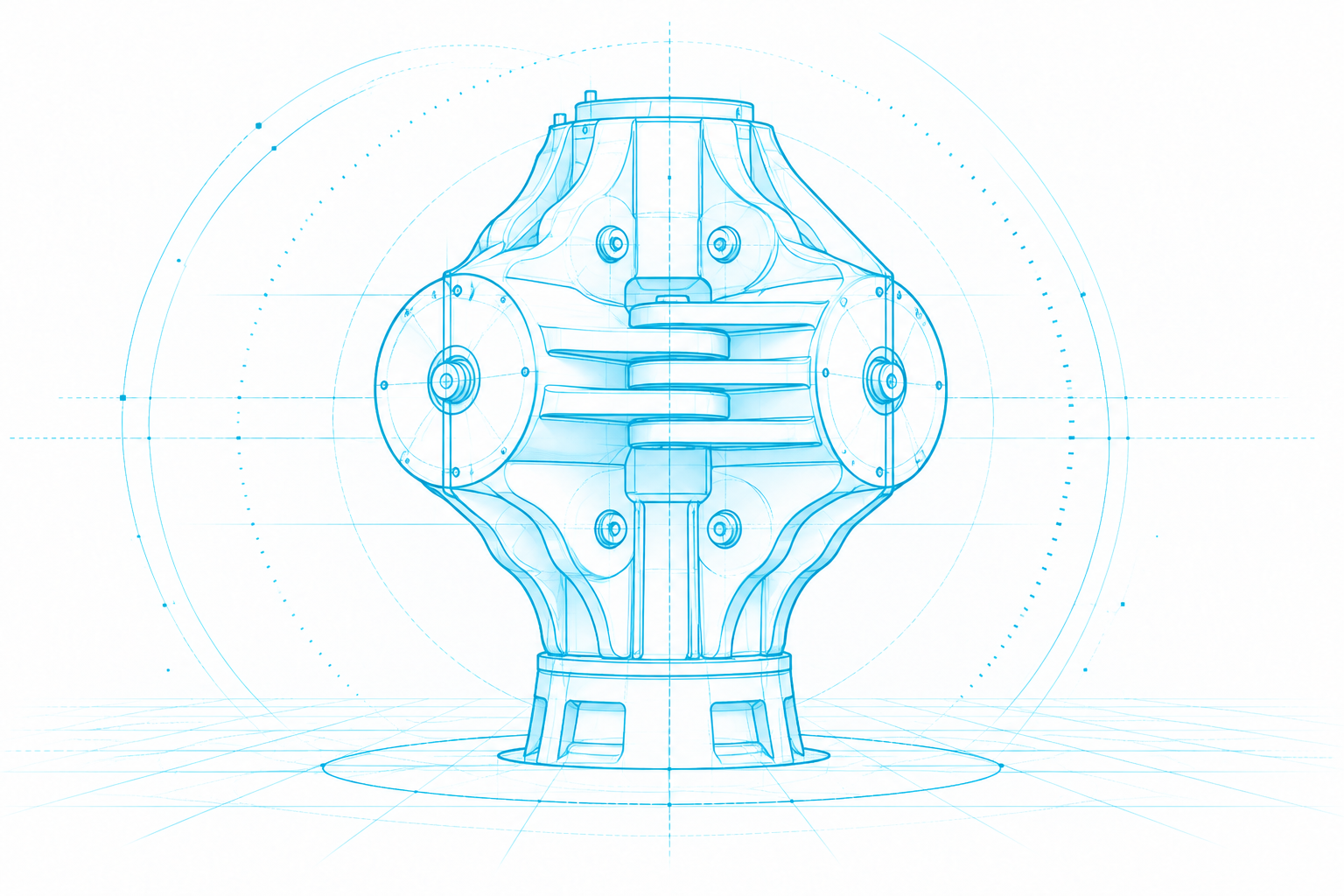
High-pressure sintering series
The 650 architecture is a versatile research, testing and production platform for material development, conventional mining-grade materials and PDC cutters for oil and gas drilling.
- Materials research and comparative testing
- Conventional mining material production
- Oil and gas PDC cutter production
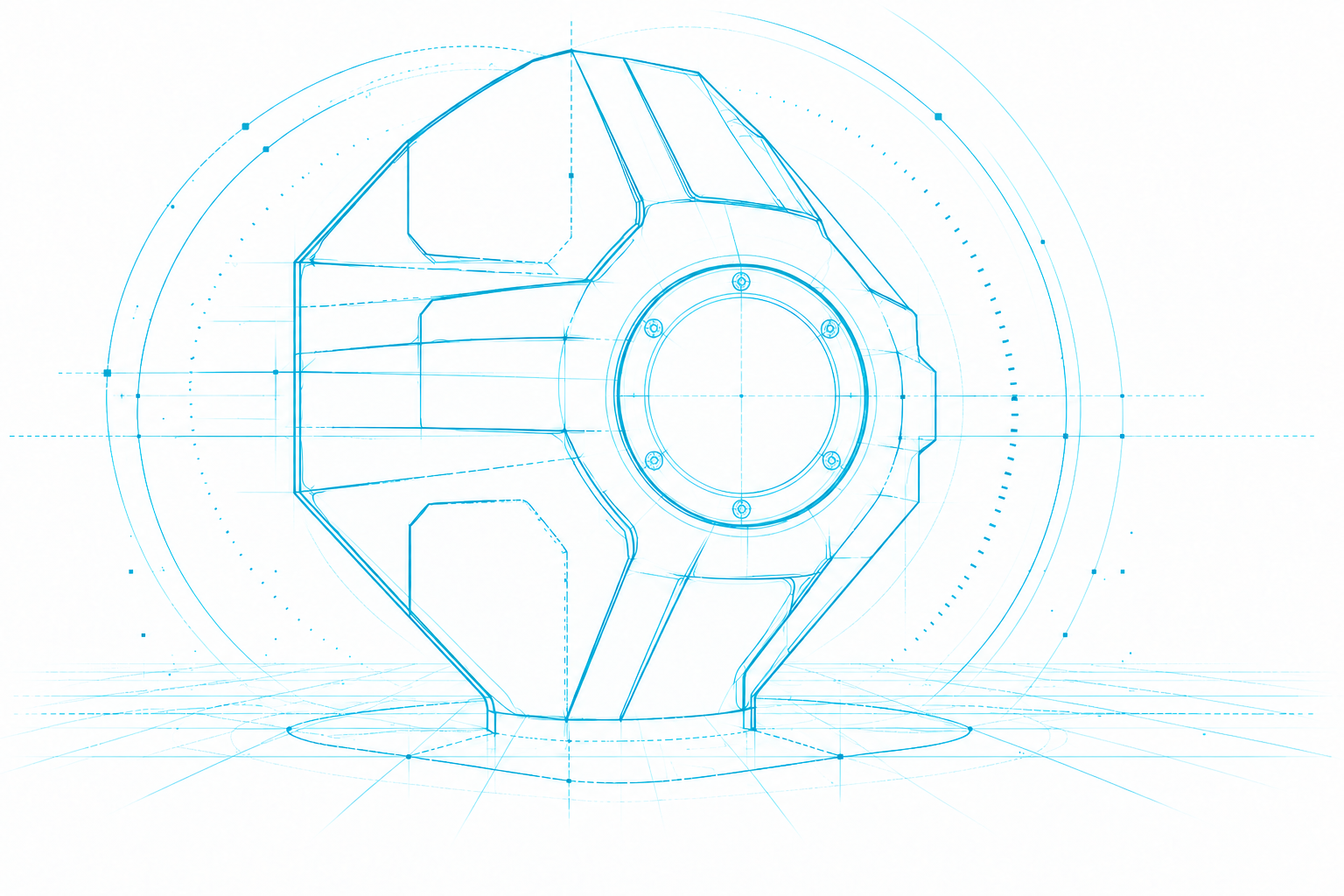
Ultra-high-pressure sintering series
The 1000 architecture extends research and production into extra-large thermal-management materials, advanced diamond systems and oversized continuous-cutting components.
- Extra-large diamond thermal materials
- Advanced diamond material development
- Oversized continuous-cutting components
MATERIAL EVALUATION LAB
Measure the structure behind performance.
A comprehensive mechanical, tribological, thermal, structural, chemical and defect-characterisation matrix feeds directly back into material and process design.
MECHANICAL
8 METHODSTransverse rupture strength
Flexural strength and comparative structural integrity.
Vickers & Knoop hardness
Indentation hardness across diamond and substrate regions.
Fracture toughness
Resistance to crack initiation and propagation.
Palmqvist toughness
Indentation-crack toughness for hardmetal systems.
Elastic constants
Young’s modulus, shear modulus and Poisson’s ratio.
Compressive strength
Load-bearing response under high compressive stress.
Impact resistance
Dynamic damage tolerance under representative loading.
Fatigue & high-rate strength
Cyclic and rapid-load durability of material systems.
TRIBOLOGY & INTERFACES
3 METHODSAbrasive wear
Dry, wet and application-specific abrasion response.
Friction & sliding wear
Coefficient of friction and tribological wear progression.
Interface & braze strength
Bond integrity across diamond, substrate and attachment layers.
THERMOPHYSICAL
6 METHODSThermal conductivity
Steady-state heat-transfer performance.
Thermal diffusivity
Laser-flash transient heat transport.
Specific heat capacity
Heat-storage response across operating temperature.
Thermal expansion
Dimensional response and interface compatibility.
Thermal shock & cycling
Resistance to rapid and repeated temperature change.
Thermal stability & oxidation
Phase events, mass change and oxidation behaviour.
MICROSTRUCTURE & PHASE
6 METHODSSEM & elemental mapping
Morphology, interfaces, chemistry and failure surfaces.
TEM & bonding analysis
Nanoscale defects, interfaces and electronic structure.
Phase & residual stress
Crystal phases, lattice state and stress evolution.
Raman spectroscopy
Diamond quality, sp3/sp2 bonding and local stress.
Metallography
Sintered structure, interface quality and process features.
Grain size & porosity
Diamond grain distribution, pores and binder morphology.
SURFACE, DEFECT & NDT
5 METHODSSurface chemistry
Surface composition, contamination and chemical states.
Density & open porosity
Consolidation quality and bulk physical consistency.
Surface profilometry
Roughness, flatness, form and wear-scar geometry.
Luminescence spectroscopy
Spatial mapping of defects and impurity centres.
Non-destructive inspection
Internal flaws, delamination and component integrity.